Tour Overview
Eight days built around Morocco's essential landmarks: a full guided tour of Marrakech's medina, the UNESCO kasbah of Ait Benhaddou, a night beneath the stars in the Merzouga dunes, and the imperial cities of Fes and Meknes via the Atlantic capital of Rabat and modern Casablanca. It's a wide loop through nearly every landscape the country offers — mountains, desert, ocean air, and centuries-old medinas — before the return journey through Ifrane's cedar forests back to Marrakech.Tour Highlights
- Visit the UNESCO World Heritage kasbah of Aït Benhaddou
- Cross the High Atlas via the spectacular Tizi-n-Tichka pass (2,260m)
- Follow the Draa Valley, historic gateway to the Sahara
- Sunset camel trek into the dunes
- Ride the golden dunes of Erg Chebbi in the Sahara
- Overnight in a traditional Berber camp under the stars
✓ Included
- 7 nights accommodation
- Breakfast & dinner daily
- Desert camp with camel trek
- Guided tours of Ait Benhaddou, Marrakech & Fes
- multilingual guide throughout
- Private transport all days
- Hotel/riad pickup and drop-off
- Bottled water during the trip
- All local taxes
✗ Not Included
- Lunches
- Drinks
- Flights
- Personal expenses
Day by Day Itinerary
Full guided tour of Marrakech: Start at the Koutoubia Mosque gardens (the city's most iconic landmark). Visit the ornate Bahia Palace with its painted cedar ceilings and beautiful courtyards. Explore the Saadian Tombs — the royal necropolis of the Saadian dynasty. Walk through the colorful souks of the medina. End the day at Jemaa el-Fna square — watch the sun set and the square come alive with food vendors, musicians, storytellers, and the unique spectacle that has made this square a UNESCO Intangible Cultural Heritage. Overnight in Marrakech.
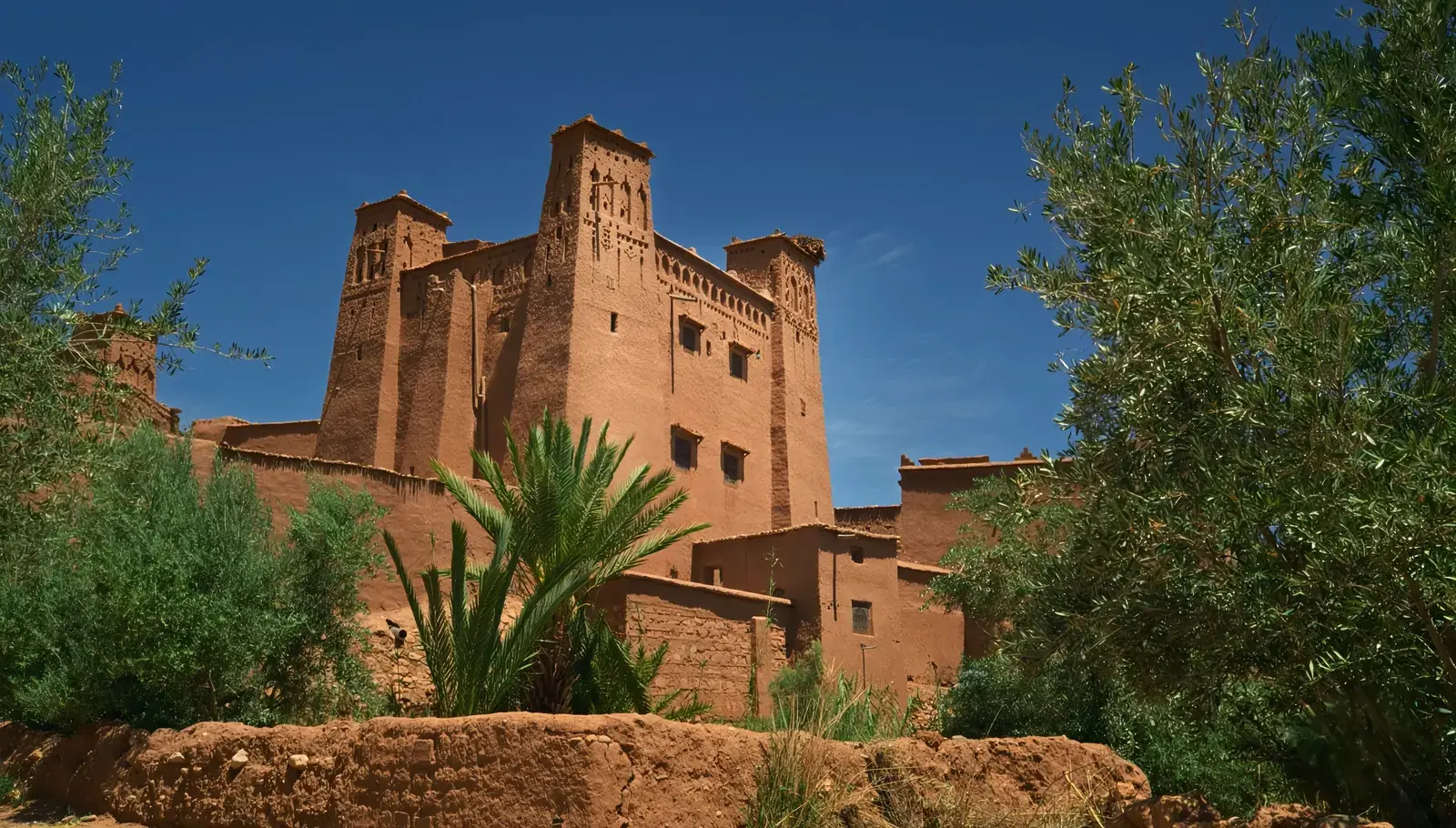
Cross the High Atlas via Tizi-N-Tichka. Visit UNESCO Ait Benhaddou and Ouarzazate. Overnight in the Dades Valley.
Ait Benhaddou is a fortified village of red earth that once guarded the caravan route between the Sahara and Marrakech. A short climb through its lanes leads to the old granary at the top, with a wide view over the Ounila valley and the palm groves below. Ouarzazate sits at the meeting point of the Draa and Dades valleys. Its Taourirt kasbah, once a residence of the Glaoui family, is worth a visit for its painted ceilings and its maze of rooms and staircases. In the Dades Gorges the road twists between red and mauve rock walls and past the rounded formations the locals call 'monkey fingers'. Villages of earth-coloured houses sit above gardens of fig and walnut trees along the river.
Through the gorges to reach the Sahara in Merzouga. Sunset camel ride and desert camp overnight with Berber music.
At their narrowest point the Todra Gorges are only about ten metres wide, with cliffs rising 300 m on each side. You walk along the cool riverbed, where local families come to picnic and climbers work their way up the rock. The camel trek into Erg Chebbi takes about an hour and is timed for sunset, when the dunes turn from gold to deep orange. Your main luggage stays in the vehicle; you take a small bag for the night. A 4×4 transfer to the camp is available if you prefer not to ride.
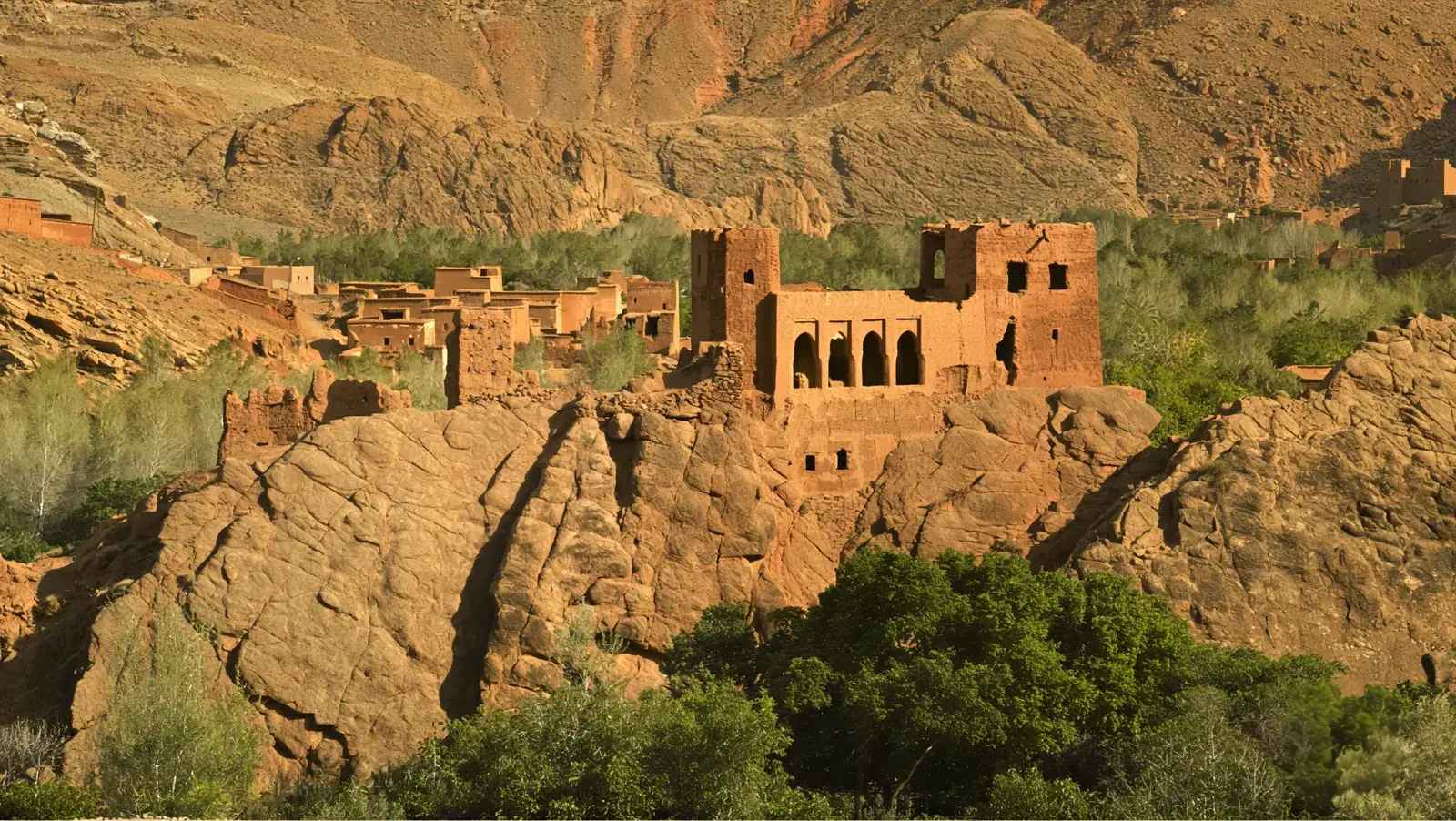
Sahara sunrise, then south through Rissani and the Draa Valley to Ouarzazate. Overnight in Ouarzazate.
Rissani was the last stop of the caravans coming from Timbuktu. Its market, at its busiest on Tuesdays, Thursdays and Sundays, still has a 'donkey park' where villagers leave their animals while they shop for dates, spices and livestock. The Draa Valley is the longest palm grove in Morocco, an almost unbroken line of oases between Agdz and Zagora. In Zagora a famous hand-painted sign reads 'Timbuktu, 52 days', the time it once took a camel caravan to cross the Sahara. It is worth getting up before dawn: you climb the nearest dune in the cool air and watch the light spread across the sand in complete silence. Breakfast is served at the camp afterwards.
Head north to Casablanca, Morocco's modern economic capital on the Atlantic. Visit the magnificent Hassan II Mosque. Overnight in Casablanca.
The Hassan II Mosque in Casablanca stands partly over the Atlantic, and its 210 m minaret is visible from most of the city. It is one of the few mosques in Morocco that non-Muslims can enter, on guided visits at set times.
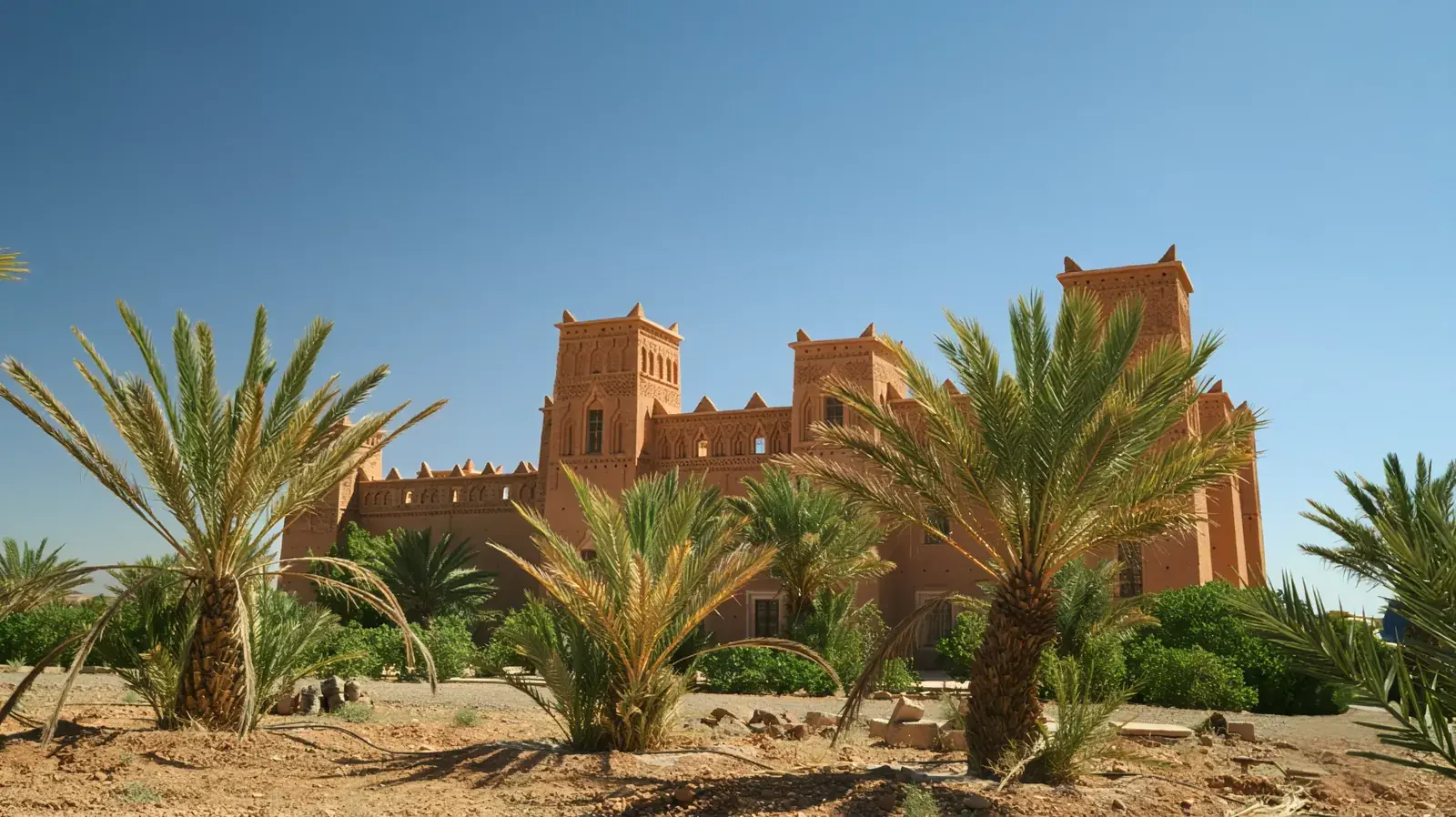
Drive to the imperial cities of Rabat (capital) and Meknes before arriving in the ancient city of Fes.
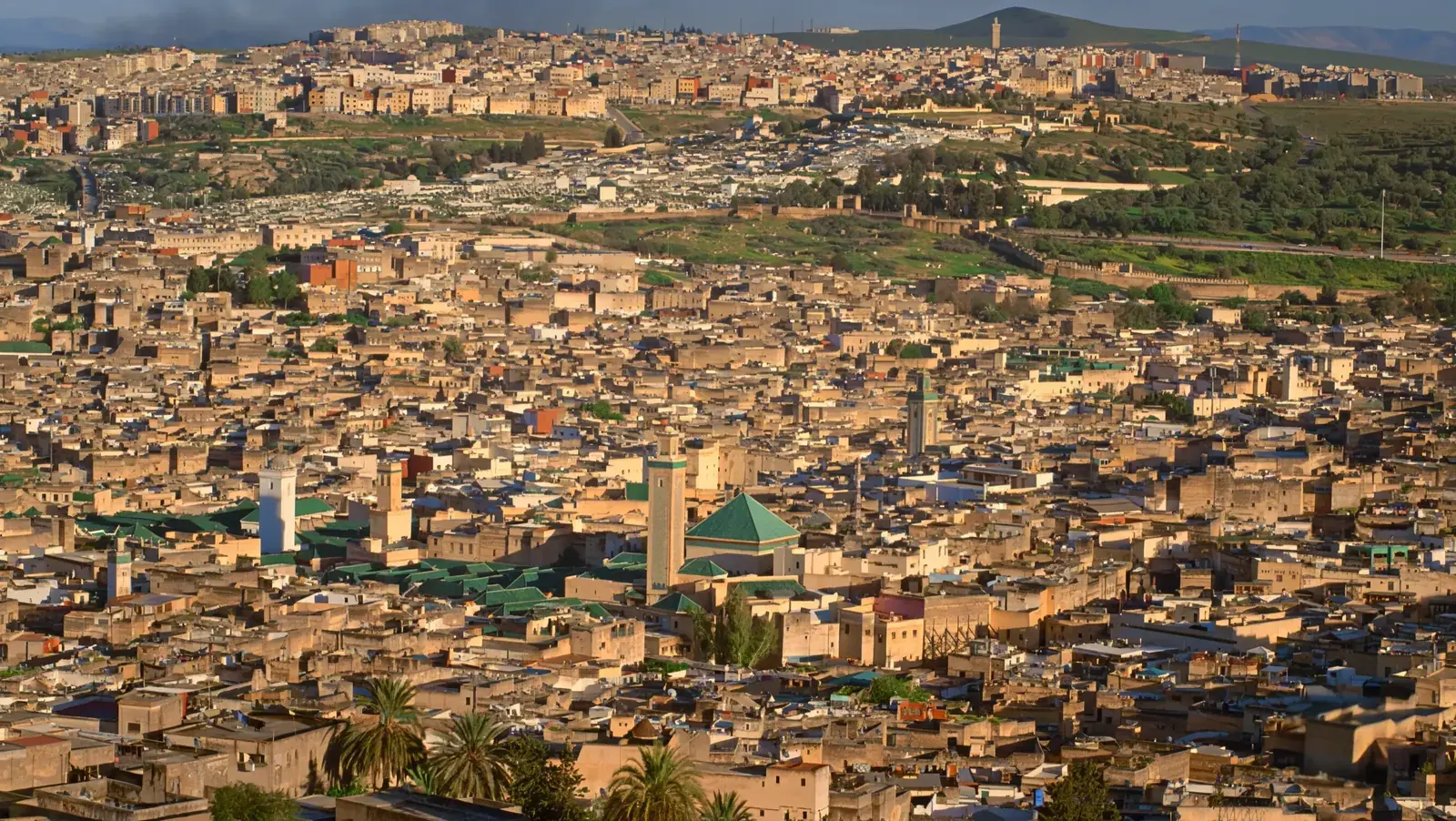
In Rabat, the Kasbah of the Udayas is a small blue-and-white quarter above the mouth of the Bou Regreg river, with a terrace café overlooking the ocean. The Hassan Tower, begun in the 12th century, was meant to be the tallest minaret in the world and was never finished. Meknes was the capital of Sultan Moulay Ismail in the 17th century. Behind its great gate, Bab Mansour, lie the vast royal granaries and stables built to feed and house thousands of horses. Arriving in Fes, ask your driver to stop at the Merenid tombs on the hill north of the city: from there the whole medina spreads out below you, a sea of flat roofs and minarets, at its best in the late afternoon light.
Guided tour of the extraordinary Fes el-Bali medina — the world's largest car-free urban area. Visit the famous tanneries, madrasas, and ancient souks.
The medina of Fes has more than 9,000 lanes, and goods are still carried by donkeys and handcarts because no car can enter. Your local guide leads you through the quarters of the dyers, coppersmiths and weavers, where the workshops have changed little in centuries.
Return journey south through the Middle Atlas mountains and the charming town of Ifrane. Arrive back in Marrakech by evening.
Ifrane surprises most visitors: with its pitched red roofs, tidy parks and stone lion, it looks more like an Alpine resort than a Moroccan town. In the cedar forest near Azrou, Barbary macaques often come close to the road. You reach Marrakech in time to settle into your riad and walk to Jemaa el-Fna as the food stalls light up. A fresh orange juice on the square and the view from one of the café terraces make an easy first evening.